
Views: 0 Author: Site Editor Publish Time: 2026-11-12 Origin: Site


Imagine a sudden power failure abruptly halting your heavy-duty machinery. A massive suspended load hangs precariously in mid-air. In such nerve-wracking scenarios, a reliable hydraulic control valve manual override emerges as an absolute lifesaver. This ingenious mechanical failsafe allows technicians to shift the internal spool safely and effectively. It entirely bypasses the need for electrical power.
What happens when the digital brain of your machine suddenly goes dark? Whether you are dealing with a burnt-out coil during peak production or conducting routine maintenance, understanding how to manually actuate these components is critical. In this comprehensive guide, we will dive deep into the underlying mechanics from a frontline engineering perspective. Furthermore, we will explore the various actuation types available, provide an actionable selection guide based on real-world parameters, and outline the essential emergency steps every operator must know to keep the facility running smoothly.
To fully grasp the value of this component, we must first understand the baseline operation of a solenoid-operated directional control valve. Under normal automated conditions, an electrical current flows through the coil. This creates a strong magnetic field. The magnetic field pushes the internal armature, which in turn shifts the steel spool to direct pressurized fluid to specific actuators. However, industrial electrical systems are rarely immune to harsh realities.
From my years on the plant floor, I can tell you that coils rapidly burn out during intense usage. A wire might snap due to excessive machine vibration. Sometimes, the main facility power grid fails completely without a moment's notice. Because solenoids rely on continuous electricity, the magnetic field collapses instantly when power is lost. This leaves the valve trapped in its default resting state. Consequently, entire production lines halt when these automated components stop responding.
This is precisely where the manual solution proves its worth. The manual override is a built-in mechanical failsafe designed to replicate the solenoid's job through direct human intervention. It empowers operators to manually actuate the flow, ensuring that critical functions can still be performed safely and quickly.
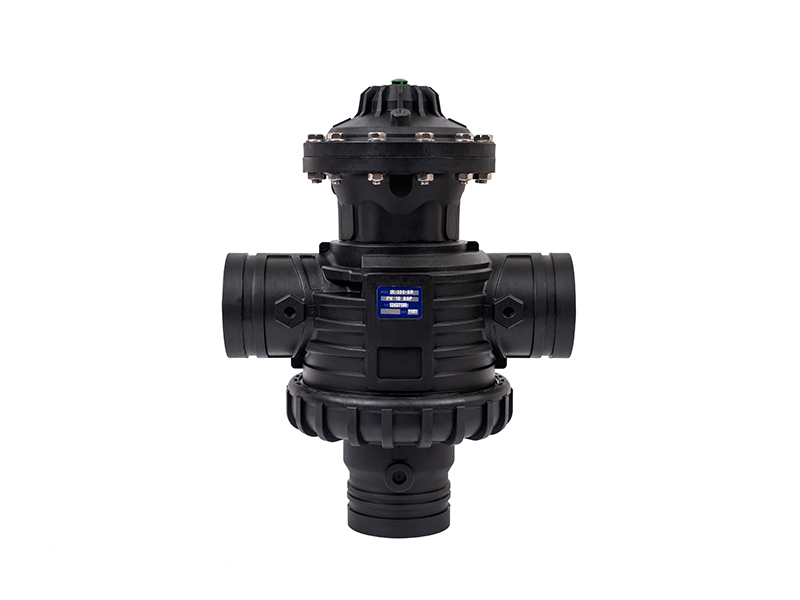
The override mechanism is typically integrated directly into the end of the solenoid tube. This provides technicians with direct physical access to the internal armature. By applying targeted physical force to this external mechanism, the operator pushes the armature inward. This mechanical action completely bypasses the inactive electrical coil. Human force is directly transferred to the internal components.
Inside the valve body lies the spool. This precision-machined cylinder slides back and forth to open and close fluid pathways. The clearances between this spool and the housing are microscopically tight to prevent internal fluid leakage. When a technician engages the override, their manual force must overcome the friction of these tight clearances as well as the heavy resistance of the internal return springs.
Let us look at a real-world engineering example. Consider a high-performance 2-inch backwash hydraulic valve used in demanding agricultural drip systems. These valves are often constructed from reinforced engineering plastics and must handle operating pressures ranging from 0.1 to 1.0 MPa. When the manual force successfully pushes the spool against that 1.0 MPa of internal pressure, the fluid dynamics change instantly. The shifted spool aligns specific internal ports, allowing highly pressurized fluid to flow from the pump port to an actuator port. Once the operator releases the manual force, heavy-duty return springs immediately take over. They push the spool back to its neutral center position and safely halt all fluid flow.
Different industrial and agricultural applications demand highly specific designs to maximize both efficiency and safety. Engineers carefully select these configurations based on maximum system pressure, accessibility requirements, and operator ergonomics.
| Override Design | Actuation Method | Best Application Scenario | Key Advantage |
|---|---|---|---|
| Standard Push-Pin | Requires a small tool to depress a flush pin. | Sensitive automated manufacturing lines. | Highly tamper-resistant; prevents accidental bumps. |
| Manual Lever | Ergonomic handle pulled or pushed by hand. | Mobile equipment and high-pressure outdoor systems. | Provides immense mechanical leverage against high PSI. |
| Bleed Screw / Twist Knob | Rotated to mechanically lock the spool open. | Continuous diagnostic testing or system bleeding. | Allows hands-free sustained fluid flow. |
High-pressure fluid power applications frequently utilize a heavy-duty manual lever mechanism. Pushing a tiny pin requires far too much physical exertion when fighting against severe internal fluid resistance. The lever provides a significant mechanical advantage, multiplying the operator input force to make shifting the spool remarkably smooth.
In contrast, scenarios requiring sustained fluid flow benefit greatly from a bleed screw or rotary twist knob. By turning the screw, the operator mechanically locks the pathway in the open position. This twist-style mechanism is invaluable for continuous diagnostic testing. The technician does not need to physically hold a button down for extended periods. These screws often feature heavily knurled edges, ensuring a solid grip even when hands are coated in oil or water.
Fluid systems inherently manage massive amounts of kinetic energy. They must remain controllable during unexpected critical failures. Overrides play a foundational role in maintaining facility safety and preventing catastrophic equipment damage.
When a sudden blackout hits a plant, the override becomes the primary tool for emergency operation. For instance, if a power outage leaves a multi-ton press stuck in the raised position, a trained technician can use the manual feature to safely and gradually lower the suspended load. This deliberate mechanical intervention prevents dangerous floor accidents.
Furthermore, electrical malfunctions can occasionally trap highly pressurized fluid within a closed circuit. This trapped potential energy threatens to rupture internal seals and compromise the structural integrity of the manifolds. By manually shifting the directional spool, an operator can open a pathway to relieve this dangerous trapped pressure back to the reservoir tank. This simple action effectively prevents blown O-rings and protects expensive downstream components from irreversible damage.
Executing a manual override requires a systematic and disciplined approach. Following exact procedural steps prevents accidental damage to newly installed machinery and ensures the safety of the commissioning team.
During the initial installation of industrial machinery, the mechanical plumbing is often completed weeks before the electrical control panels are wired. System integrators rely on manual features extensively during this field setup phase. Because the Programmable Logic Controller is not yet active, manual operation allows technicians to empirically verify flow paths. They can bleed trapped air from the lines and confirm cylinder stroke lengths before finalizing the automated software logic.
Step one involves meticulously verifying the overall system pressure using calibrated gauges. Ensure all personnel are standing completely clear of moving machinery parts. Next, the technician must identify the correct override port by cross-referencing the schematic to ensure the desired directional movement.
During step three, the operator applies steady, controlled pressure to the mechanism. Never strike it with a hammer, which could bend the internal armature. Step four requires careful observation of the resulting actuator movement while inspecting the manifold for any weeping fluid leaks. Finally, step five involves smoothly releasing the mechanism and visually confirming that the internal springs have successfully returned the system to its safe neutral state.
Recent industry analyses reveal a fascinating paradox in fluid control engineering. As systems become increasingly dominated by IoT sensors and automated smart controllers, the demand for rugged, fail-proof mechanical overrides is actually surging. Facility managers realize that software glitches and sensor failures are inevitable. Therefore, a physical backup remains non-negotiable.
We are seeing a massive shift toward hybridized designs. Modern valves now integrate advanced composite materials. For example, reinforced nylon bodies are replacing traditional cast iron in agricultural and water treatment applications to combat severe corrosion. Simultaneously, the override mechanisms themselves are being upgraded with environmentally sealed rubber boots and tamper-evident locking caps. This ensures that while the system is smart enough to report its own flow data to a cloud server, it remains mechanically robust enough to be operated by hand in the middle of a muddy field during a storm.
Selecting the optimal features during the procurement phase directly impacts long-term operational success. Buyers must evaluate their specific industrial context with a critical eye rather than relying on abstract concepts.
First, evaluate your operating pressure. If your system runs at low to medium pressures up to 1.0 MPa, a standard push-pin or twist knob on a reinforced plastic valve body is highly efficient and cost-effective. However, if you are dealing with heavy-duty machinery exceeding 3000 PSI, you must specify an extended manual lever to provide the necessary physical leverage.
Second, assess your environmental hazards. In harsh, dusty, or wet environments like drip irrigation setups, selecting fully sealed override designs is imperative. Particulate ingress will quickly destroy delicate internal spool clearances. Look for valves featuring high-quality diaphragm structures and weather-resistant external components.
Finally, consider security. A concealed flush push-pin is ideal for highly automated, sensitive manufacturing environments. It actively prevents accidental tampering by untrained floor staff. Conversely, mobile equipment operators generally prefer an exposed handle, as it guarantees rapid, tool-free mechanical response during critical outdoor operations.
Routine maintenance keeps the manual override functioning flawlessly. It ensures the valve is ready the moment an emergency strikes. Addressing minor weeps early prevents catastrophic system downtime later.
Occasionally, a technician will find that the override pin refuses to budge. This is rarely a mechanical failure of the pin itself. Fluid contamination is usually the culprit. Microscopic dirt particles can wedge between the spool and the housing, creating a condition known as silting. Furthermore, excessive backpressure trapped in the return tank line can create a hydraulic lock. This makes manual actuation physically impossible.
If the mechanism is jammed, never use blunt force or heavy tools to strike it. Instead, verify that the tank line is clear of obstructions and check the fluid cleanliness. If the internal armature has been bent by previous abuse, the entire assembly will likely need replacement.
Replacing leaking seals requires fully depressurizing the system and performing proper lockout procedures. Once safe, technicians can carefully remove the override assembly, extract the degraded O-rings, and install fresh seals. Always lubricate new seals with clean fluid before reassembling and testing the unit.
Safety must remain the absolute highest priority during any manual intervention. Strict adherence to facility protocols protects operators from severe crushing injuries and high-pressure fluid injection hazards.
It is vital to remember that engaging a manual override completely bypasses all electrical safety interlocks, limit switches, and programmed safety logic. The digital control system is entirely blind to the fact that fluid is moving. Actuating the flow without verifying the machine's mechanical path risks sudden, full-speed cylinder extensions. If a heavy load is suspended, manually shifting the wrong port can cause that load to free-fall instantly.
Facilities must enforce rigorous Standard Operating Procedures for manual testing. Clear communication with the entire floor team is always the first step before touching any valve. Technicians must wear proper personal protective equipment, including impact-resistant safety glasses and heavy-duty gloves, to guard against potential high-pressure sprays. You never want to rely solely on software when gravity and extreme pressure are involved.
A manual override is far more than a simple mechanical button. It is a vital bridge between electrical automation and raw mechanical reliability. Serving as a crucial failsafe, it empowers technicians to maintain control over immense fluid power when digital systems inevitably fail.
Proper utilization of these mechanisms ensures maximum safety during critical emergency operations and vastly streamlines the initial commissioning of new machinery. By understanding the distinct advantages of various designs, system designers can specify the perfect components for their unique industrial or agricultural environments.
Are you looking to upgrade your fluid control systems with reliable, high-performance components? Explore the full range of premium solutions at Arka Irrigation. Whether you need robust 2-inch backwash valves for agricultural setups or precision control components for complex manifolds, our engineering team is ready to help you select the exact specifications for your project. Visit Arka Irrigation today to secure the mechanical reliability your operations demand.
Generally, no. Manual overrides, especially standard push-pins and spring-return levers, are engineered strictly for temporary diagnostic testing or emergency operation. Leaving a twist-style override mechanically locked for extended periods completely bypasses your automated safety controls. This creates severe safety risks, as the system cannot automatically shut down in response to sensor faults. It is only acceptable temporarily during specific, highly controlled maintenance tasks.
High physical resistance is typically caused by elevated internal pressure acting directly against the valve spool, or by trapped backpressure in the return line. If the pin requires extreme force, never strike it with a hammer or heavy tool. This will cause permanent internal damage. Instead, verify the system pressure gauges, check for blocked return lines, or consider upgrading to a valve equipped with a lever to provide better mechanical leverage.
While the vast majority of modern industrial directional control valves include a standard push-pin override to assist with initial setup and routine diagnostics, it is not a universal feature. Some highly specialized valves designed for high-security applications intentionally omit the manual override to ensure strict tamper-proofing. Always review the exact manufacturer specifications when procuring new components.
A push-pin requires constant, active physical pressure from a technician to keep the spool shifted. The moment pressure is released, the internal springs return the valve to neutral. In contrast, a rotary twist knob or bleed screw can be turned to mechanically lock the spool in the shifted position. This allows the operator to safely step away from the valve, making it ideal for continuous flow testing or prolonged system bleeding.
Yes, manual levers are specifically engineered to provide the necessary mechanical advantage to overcome high internal fluid pressure safely. However, while the lever itself can easily handle the pressure, you must ensure that manually shifting the flow will not cause unsafe, rapid movement of the connected cylinders or motors. Always verify that the mechanical path is clear before actuating the lever.
To test it manually, first ensure all personnel are clear of the machinery and verify the system pressure is within safe limits. Locate the override pin or lever on the solenoid coil. Depress the pin using a small, blunt tool or actuate the lever smoothly. Observe the connected actuator for the correct directional movement. Release the override to confirm the internal springs return the spool to its neutral position, stopping the movement immediately.
No, an override cannot fix a mechanically broken valve. It is solely designed to bypass a failed electrical signal or a burnt-out solenoid coil. If the internal spool is jammed due to fluid contamination, bent armatures, or degraded seals, pushing the manual override will not resolve the issue. In fact, forcing a jammed spool manually can cause further internal scoring and permanent damage to the valve body.


