
Views: 0 Author: Site Editor Publish Time: 2026-10-27 Origin: Site


Are clogged drip emitters costing your farming operation valuable time and money? Picture this. It is the peak of the growing season. The relentless summer heat is bearing down. Meanwhile, muddy water is quietly ruining your crops and equipment daily. Sand and silt destroy delicate irrigation systems incredibly fast. You need a reliable, automated solution right now.
In this comprehensive guide, we break down how upgrading your filtration infrastructure fixes this persistent issue. You will discover methods to drastically reduce downtime while protecting your overall yield.
Surface water is the undeniable lifeblood of modern agriculture. Yet, it rarely arrives at the field in a pure state. Farmers draw water from rivers, open canals, lakes, or shallow sandy wells. In doing so, they inadvertently pull in a massive volume of suspended solids. These contaminants range from gritty, heavy sand that scours pipes to microscopic silt that behaves like a liquid paste. They present a continuous threat to the delicate architecture of modern irrigation infrastructure.
Specifically, the impact on micro-irrigation systems is catastrophic. Drip irrigation tapes and micro-sprinklers rely on microscopic flow paths. They deliver precise amounts of water and dissolved fertilizer directly to the root zone. Raw, unfiltered water allows silt particles to aggregate inside these narrow passages. Over a surprisingly short period, this accumulation forms solid, impenetrable blockages.
The cost of inaction extends far beyond the immediate annoyance of a clogged pipe. When emitters block, crop watering becomes highly uneven across the field. Some plants suffer from severe drought stress. Adjacent rows might become waterlogged. This ultimately leads to inconsistent crop yields and lower market value at harvest. Furthermore, abrasive sand acts like liquid sandpaper inside the irrigation network. It accelerates the wear and tear on expensive centrifugal pumps. It degrades rubber valve seals and triggers dangerous pressure spikes that can burst mainlines. Relying on inadequate filtration forces farm managers to bleed capital on replacement parts and emergency manual labor.
An agricultural disc filter is a highly engineered water treatment device. It is explicitly designed to capture and expel suspended solids before they can breach the field distribution network. Unlike basic screen filters that only catch particles on a single flat surface, disc systems utilize a three-dimensional depth filtration method. This sophisticated approach makes them the industry standard for managing challenging environmental water sources laden with heavy sediment.
The core filtration mechanism relies on a tightly packed column of synthetic, color-coded rings. Each individual disc is manufactured from durable, corrosion-resistant polymers. They feature a series of precise, diagonal grooves etched into both sides. When these discs are stacked together inside the housing and compressed by hydraulic pressure, the intersecting grooves create a complex matrix of microscopic traps.
As raw irrigation water is forced through the unit from the outside of the stack toward the hollow inner core, it must navigate this tortuous path. Large sand particles are blocked immediately on the outer perimeter. Finer silt and organic matter are captured deep within the intersecting grooves. This depth filtration capability allows the unit to hold a massive volume of debris before experiencing any significant drop in water pressure.
The true operational advantage of this setup lies in its self-cleaning capability. In a traditional manual system, a field worker must physically open the housing, remove the dirty components, and scrub them clean with a brush. This is a grueling process that completely halts irrigation. Automatic backwash technology eliminates this bottleneck entirely.
This process is governed by a pressure differential sensor installed across the inlet and outlet manifolds. As the matrix traps more dirt, the water pressure on the outlet side naturally begins to drop. Once this differential reaches a pre-set threshold, the system controller initiates the cleaning cycle. A specialized valve reverses the flow of clean water back into the hollow core. Simultaneously, the hydraulic compression is released. The discs decompress and separate slightly. High-pressure water sprays outward through specialized nozzles, causing the loose discs to spin rapidly. This centrifugal force violently ejects all trapped sand, silt, and algae down a dedicated flush line in mere seconds. The rest of the farm irrigation continues without interruption.
Recent market analyses highlight a surging global demand for automated agricultural filtration. This trend is driven primarily by escalating water scarcity and the widespread adoption of precision micro-irrigation. As climate patterns shift and droughts become more frequent, farmers are increasingly forced to draw from marginal or highly turbid surface water sources.
Consequently, industry reports indicate a massive transition away from manual screens toward intelligent, self-cleaning depth filtration systems. This shift is not merely about convenience. It is a strategic adaptation. By integrating smart sensors and automated flushing, modern agricultural operations can ensure food security. They maintain precise fertigation schedules and drastically minimize the water footprint of their pumping stations. The focus has moved from simple debris removal to comprehensive, automated water quality management.
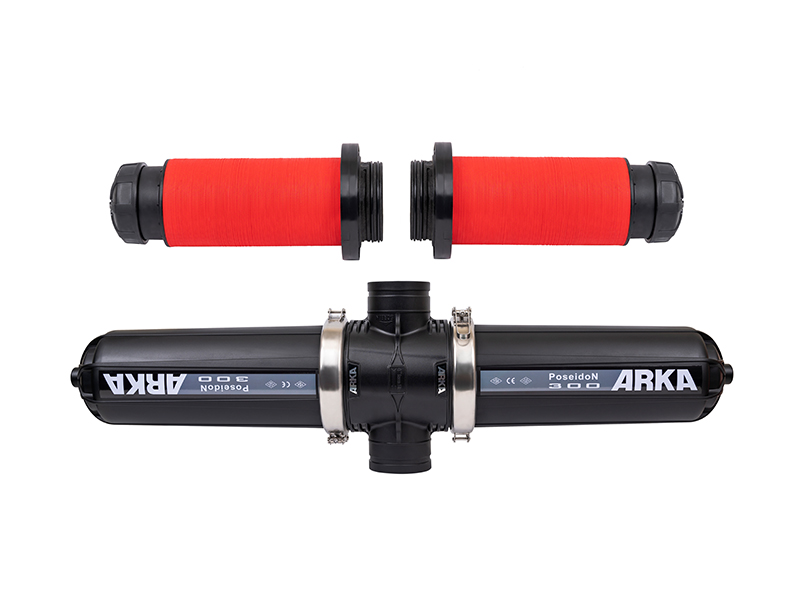
For decades, agricultural engineers have debated the merits of modern disc technology versus traditional sand media tanks. Both systems offer depth filtration. However, empirical data and field performance metrics reveal distinct differences in how they handle fluctuating water quality.
When evaluating the blockage duration, disc configurations demonstrate highly predictable performance. In rigorous field tests involving high-silt river water, these units efficiently trap inorganic particles without allowing them to channel through the media. In contrast, traditional sand filters can sometimes suffer from channeling. This occurs when high-pressure water forces a path directly through the sand bed. Silt bypasses the trap entirely and reaches the drip tape. Moreover, when a disc unit initiates its backwash cycle, the physical spinning ensures a complete recovery of the filtration area. Sand media can suffer from mud-balling over time. Silt binds with the silica and permanently reduces efficiency.
Space allocation is a critical factor in pump house design. An automated disc array requires a significantly smaller physical footprint compared to sand media tanks. Sand systems require massive, heavy steel or fiberglass vessels filled with tons of crushed rock to achieve the same flow rate. A compact, skid-mounted disc array handles this with ease. This compact nature makes the newer technology easier to transport, install, and integrate into existing infrastructure.
Water conservation during the cleaning cycle is a major differentiator. Sand tanks require a high volume of water and several minutes of continuous flushing to lift and clean the heavy sand bed. Conversely, the newer automated systems utilize a fraction of that water. They complete their high-velocity spin cycle in a matter of seconds.
| Feature | Automatic Disc Filter | Sand Media Filter |
|---|---|---|
| Filtration Method | Grooved synthetic discs | Crushed silica bed |
| Backwash Duration | 10 to 20 seconds per pod | 3 to 5 minutes per tank |
| Water Waste | Very Low | High |
| Footprint | Compact, skid-mounted | Large, heavy tanks |
| Risk of Channeling | Zero | Moderate to High over time |
Not all agricultural water challenges are identical. Manufacturers have developed specialized configurations to meet specific hydraulic demands. Understanding these variations helps purchasing managers select the exact equipment required for their unique field topography.
When designing a large-scale irrigation manifold, the physical orientation of the inlet and outlet pipes dictates the efficiency of the water flow. The H-type disc filter is engineered with a specific structural geometry that resembles the letter H. This intelligent design allows the raw water inlet and the clean water outlet to be positioned in a parallel configuration. For instance, a standard 3-inch H-type unit significantly minimizes pressure loss as water moves through the primary manifolds. This makes it highly suitable for expansive agricultural fields that require multiple pods operating in tandem. The H-type configuration ensures uniform water distribution across the entire battery.
Similarly, the AGL disc filter series is optimized for specific flow rates and enhanced chemical resistance. Modern farming heavily relies on fertigation. This involves injecting liquid fertilizers and soil amendments directly into the water supply. These specialized models are constructed from advanced, industrial-grade polymers. They resist degradation from harsh agricultural chemicals, acids used for pH adjustment, and liquid nitrogen.
One of the greatest engineering achievements of these specialized designs is their modular nature. Farms are not static. A modular system can grow seamlessly alongside the farm acreage. If a farmer increases their irrigated land, they do not need to discard their existing setup. Instead, they simply bolt another pod to the existing manifold. Systems can easily scale from a basic 2-pod array for a small orchard to a massive 12-pod array managing thousands of gallons per minute.
Purchasing capital equipment requires a clear demonstration of Return on Investment. Upgrading to an automated farm irrigation filter transforms operational expenses into measurable savings. This directly impacts the bottom line.
The most immediate financial benefit is the drastic reduction in labor costs. Manually digging out fouled sand media or scrubbing steel screens requires pulling workers away from crop-producing tasks. During peak summer heat, screens may need cleaning several times a day just to keep water flowing. An automated system monitors itself and cleans itself without human intervention. This paradigm shift allows farm managers to reallocate labor to more profitable activities.
Raw sand is highly abrasive. When it bypasses inadequate traps, it scours the inside of PVC pipes. It degrades the rubber diaphragms inside expensive control valves and ruins the brass impellers of booster pumps. By installing a highly efficient barrier, the entire downstream network is protected with crystal-clear water. This extends the operational lifespan of miles of drip tape and field hardware.
Irrigation uniformity is the absolute key to maximizing crop yield. If a field experiences pressure drops due to clogged pipelines, the plants at the end of the row receive significantly less water and fertilizer. The automatic backwash mechanism ensures that the system pressure remains constant throughout the entire watering cycle. Consistent pressure guarantees uniform application. This translates directly to uniform crop growth and increased revenue.
Selecting the appropriate filtration system is a critical engineering decision. The integration of high-capacity units requires a thorough analysis of environmental variables. A mismatched system can lead to excessive pressure drops, frequent flushing cycles, and compromised efficiency. Let us break down the exact parameters you need to check.
The foundational step in procurement is conducting a comprehensive water quality analysis. Surface water sourced from rivers and canals exhibits significant seasonal variability in sediment load. During heavy spring runoff, the concentration of suspended solids can spike dramatically.
To quantify this, you must determine the Parts Per Million of sand, silt, and organic matter. For a low to moderate load under 50 Parts Per Million, standard configurations handle the debris efficiently. An extreme load over 100 Parts Per Million often requires a primary separation stage. A centrifugal hydrocyclone placed upstream removes the heaviest abrasive particles before they ever reach the synthetic rings.
Filtration capacity must precisely match or slightly exceed the maximum output of your pumps. Undersizing the array forces water through the grooves at an excessive velocity. This drives microscopic silt particles deep into the plastic and causes permanent embedding. When calculating the required flow rate, consider the peak demand of your irrigation zones. Build in a 15 to 20 percent safety margin. For example, a standard 3-inch pod typically handles around 30 to 50 cubic meters per hour depending on the water quality. Furthermore, ensure the system can maintain a minimum operating pressure. The automatic mechanism relies on a specific threshold, usually around 30 to 40 PSI, to decompress and spin effectively.
The micron rating determines the size of the particles the unit will capture. In agricultural applications, this is denoted by a standardized color-coded system corresponding to specific mesh sizes. Choosing the correct rating is a delicate balancing act. A rating that is too fine triggers constant backwashing. One that is too coarse allows damaging silt to pass through.
| Disc Color Code | Micron Rating | Mesh Equivalent | Ideal Agricultural Application |
|---|---|---|---|
| Blue | 400 Microns | 40 Mesh | High-volume sprinklers, pivot irrigation, and pre-filtration. |
| Yellow | 200 Microns | 80 Mesh | Standard impact sprinklers and micro-sprinklers in orchards. |
| Red | 130 Microns | 120 Mesh | Industry Standard: Drip tapes, subsurface drip irrigation. |
| Black | 100 Microns | 140 Mesh | Ultra-low flow drip emitters and specialized greenhouse fertigation. |
The operational lifespan and reliability of these advanced systems depend heavily on proper initial installation. Adherence to a strict maintenance protocol is also necessary. While they eliminate the daily labor of manual scrubbing, they remain precise mechanical devices operating in harsh environments.
Proper integration into your existing infrastructure is paramount. Attention to plumbing geometry and pressure dynamics will prevent long-term mechanical failures.
Although daily operation is completely hands-off, implementing a seasonal maintenance schedule ensures peak efficiency for decades.
Modern agricultural operations require consistently clean irrigation water to remain profitable. By efficiently removing heavy silt and organic matter from your water source, an automated filtration system acts as the ultimate safeguard for your farm. These advanced setups protect delicate crops from severe drought stress caused by clogged emitters. They save thousands of dollars in manual labor and damaged equipment.
Carefully evaluate your unique water conditions. Assess your flow rate requirements and select the correct micron rating for your specific topography. Upgrading your infrastructure today is a strategic investment that will maximize your overall harvest yield for years to come.
Ready to eliminate clogged emitters and optimize your farm water management? Explore the high-performance solutions at Arka Irrigation. Match your specific field requirements with our advanced modular filtration systems to guarantee a flawless harvest this season.
Yes, but with critical engineering caveats. While these systems are highly efficient at trapping suspended solids, drawing water directly from a fast-moving river often introduces massive quantities of heavy, abrasive sand. If the sand concentration exceeds 50 to 100 Parts Per Million, feeding this directly into the pods will force the system into near-constant backwash cycles. In these high-load scenarios, empirical guidelines dictate pairing the unit with a hydrocyclone acting as a primary pre-filter. The hydrocyclone removes the heavy sand using centrifugal force, allowing the main unit to efficiently manage the remaining fine silt.
Water conservation is a primary engineering advantage of these systems. Unlike traditional sand media tanks that require several minutes and hundreds of gallons of water to flush, an automated disc system is remarkably efficient. The backwash cycle typically lasts only 10 to 20 seconds per individual pod. Because the system cleans one pod at a time while the others continue supplying filtered water, the overall irrigation process is never interrupted. On average, the water consumed during a complete cycle represents less than one to two percent of the total volumetric flow.
The difference lies in the physics of the filtration mechanism. A standard screen utilizes a single layer of stainless steel or plastic mesh, trapping particles on its surface. Soft organic matter like algae can easily be extruded through the mesh under high water pressure. Conversely, a disc setup utilizes hundreds of stacked, grooved rings that create a complex, three-dimensional matrix. As water travels from the outside of the stack to the inside, particles are trapped at multiple depths, making it vastly superior for high-silt environments.
No, heavy electrical infrastructure is not required. The physical cleaning mechanism is driven entirely by the hydraulic pressure of the water itself. However, a minor power source is needed to operate the brain of the system. This includes the differential pressure sensor, the electronic controller, and the latching solenoids that open and close the valves. Most modern setups utilize low-voltage DC controllers powered by simple 9V or 12V batteries, which can easily last an entire season.
Under normal operating conditions, the filtration components exhibit exceptional longevity. They are precision-manufactured from advanced industrial plastics, typically high-grade polypropylene or reinforced polyamide. These materials are inherently resistant to corrosion, rust, ultraviolet degradation, and harsh chemicals. Assuming the farm manager adheres to routine maintenance, the stacks reliably last between 5 to 10 years before requiring replacement.
A clean array typically experiences a very minimal pressure drop, usually between 2 to 5 PSI. As the grooves capture silt and organic matter, this differential gradually increases. The automated controller is usually programmed to trigger a backwash cycle when the pressure differential reaches approximately 7 to 10 PSI. This ensures the downstream irrigation network maintains optimal operating pressure at all times.
Sizing a multi-pod system requires dividing your total maximum pump output by the optimal flow rate of a single pod, factoring in your specific water quality. For instance, if your main pump delivers 200 cubic meters per hour and you are drawing moderately dirty canal water, a single 3-inch pod might safely process 40 cubic meters per hour. Therefore, a 5-pod modular manifold would be the engineered standard to handle the load efficiently while leaving one pod available for backwashing without dropping system pressure.


