
Views: 0 Author: Site Editor Publish Time: 2026-11-05 Origin: Site


Unpredictable water quality can rapidly destroy sensitive industrial and agricultural equipment. When a filtration system clogs, production halts almost immediately. This translates directly into costly downtime, ruined crops, and severe maintenance headaches. Understanding the exact mechanisms that initiate a self-cleaning sequence is essential for maintaining smooth operations and extending the lifespan of your entire water infrastructure. In this comprehensive guide, we will break down the precise triggers that command your equipment to clean itself. You will learn how to balance optimal water filtration with aggressive resource conservation.
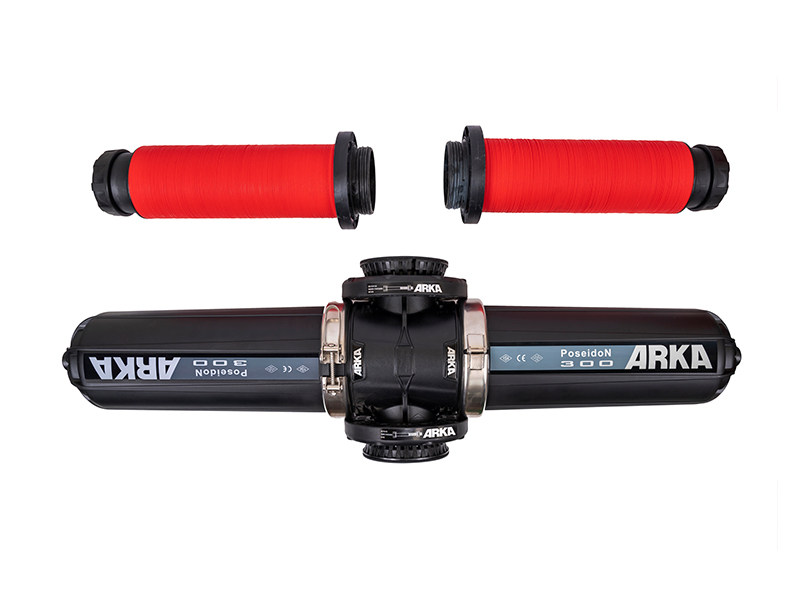
To truly grasp what initiates a self-cleaning sequence, you must first look inside the housing. The underlying mechanical and hydraulic architecture dictates how the equipment responds to dirt. Specifically, an Automatic Disc Filter operates using a specialized stack of synthetic polymer rings. For instance, standard agricultural units often utilize color-coded discs, such as red rings denoting a 130-micron filtration grade. Each ring features diagonally intersecting grooves manufactured to precise tolerances. When compressed tightly together by hydraulic pressure or a robust mechanical spring, these microscopic grooves form a complex, three-dimensional filtration matrix.
During standard operation, raw water is forced from the outside of the disc stack to the inside. This flow path traps suspended solids, organic matter, and inorganic particles within the intersecting pathways. Think of the central command unit as the nervous system of this entire operation. It continuously monitors the operational state of the filter through connected sensors. Without this intelligent oversight, the filter would eventually blind over completely. That scenario leads to catastrophic pressure drops and the starvation of downstream processes.
Visualizing the flow transition helps operators troubleshoot effectively. Hydraulic valves direct raw water into the filter housings under normal conditions. When a specific event occurs, an electrical signal travels to a small solenoid. This tiny component alters the hydraulic command and instantly reverses the flow of water. The disc stack decompresses. High-pressure clean water is then injected from the inside out, spinning the discs rapidly to dislodge trapped debris and flush it out through a dedicated drainage manifold.
The most critical and frequently utilized trigger in any automated filtration infrastructure is Differential Pressure. In fluid dynamics, this concept refers to the measurable variance between the raw water entering the housing and the clean water exiting the system. As suspended solids accumulate within the grooved matrix of the discs, the open area available for water passage steadily decreases. This physical restriction creates intense hydraulic resistance. Consequently, the inlet pressure spikes while the outlet pressure drops. The mathematical difference between these two values dictates the exact pressure loss.
Relying on pressure variance is highly advantageous for modern facilities. It provides an accurate, real-time assessment of the actual debris buildup within the system. Imagine a busy agricultural facility where raw water quality fluctuates daily due to sudden rainstorms. Relying on arbitrary cleaning schedules in this environment is a recipe for disaster. A pressure-initiated cleaning sequence only occurs when the filter is genuinely dirty. This precision prevents unnecessary water waste and minimizes the interruption of steady downstream flow.
Facility managers must program the control board to recognize a specific threshold. Finding the operational sweet spot depends entirely on the application, the micron rating of the discs, and the nature of the suspended solids. Setting the threshold too low results in hyperactive cleaning cycles. This error wastes immense amounts of energy and flush water. Conversely, setting it too high risks permanent deformation of the plastic discs and severe flow restriction.
Allowing a filter to operate beyond its recommended threshold is mechanically hazardous. Excessive pressure forces particulate matter deeper into the microscopic grooves. This leads to a severe condition known among engineers as blinding. Once a disc stack is blinded, standard reverse-flow velocity cannot dislodge the compacted debris. The facility is then forced to perform a labor-intensive manual teardown and chemical acid bath. Furthermore, extreme resistance causes structural stress on the manifolds and hydraulic valves, significantly reducing the equipment's overall lifespan.
Typical Pressure Thresholds by Application
| Application Type | Disc Micron Rating | Recommended Trigger (Bar) | Recommended Trigger (PSI) |
|---|---|---|---|
| Standard Field Irrigation | 130 - 200 Micron | 0.5 - 0.6 Bar | 7.0 - 8.5 PSI |
| Industrial Cooling Towers | 50 - 100 Micron | 0.4 - 0.5 Bar | 5.8 - 7.0 PSI |
| Heavy Wastewater Effluent | 200 - 400 Micron | 0.6 - 0.8 Bar | 8.5 - 11.5 PSI |
As global water scarcity intensifies, the industrial and agricultural filtration sectors are experiencing a massive technological shift. Recent industry trends highlight the rapid integration of Internet of Things sensors and advanced data analytics into filtration control panels. Instead of relying on static, outdated parameters, modern facilities are adopting dynamic algorithms. These smart systems monitor real-time water quality fluctuations and adjust cleaning schedules autonomously.
Regulatory bodies are increasingly scrutinizing agricultural runoff and industrial wastewater volumes. Consequently, equipment manufacturers are pushing the boundaries of algorithmic efficiency. By utilizing predictive maintenance alerts and highly calibrated pressure sensors, next-generation filtration systems can reduce wastewater generation by up to forty percent. This technological evolution not only meets strict environmental compliance standards but also drastically lowers energy consumption across large-scale pumping operations.
While pressure variance remains the primary metric for initiating a cleaning sequence, relying solely on hydraulic sensors leaves the system vulnerable. Certain types of insidious contaminants require a different approach. This is exactly where the Timer Trigger becomes indispensable. Time-based flushing acts as a mandatory fail-safe. It commands the system to clean itself after a predetermined number of hours, regardless of the current pressure readings.
Why rely on time? The answer lies in the unique behavior of organic matter. Seasonal algae, bacterial biofilm, and soft river silt can coat the outer surface of the disc stack in a highly lubricated, slimy layer. Because this biofilm is soft and pliable, it rarely creates a significant pressure drop that the sensors can immediately detect. However, if left undisturbed for days, the bacteria will rapidly multiply. They excrete extracellular polymeric substances and harden into an impenetrable crust. A timer ensures that the discs are agitated and flushed before biological colonization can solidify.
Configuring this interval requires a careful analysis of your source water. For deep well water with high inorganic sand content, the timer might be set to twelve or twenty-four hours simply as a redundant backup. In stark contrast, surface water drawn from a warm, nutrient-rich lake poses a higher biological threat. The timer in this scenario must be aggressively set to initiate a flush every two to four hours to prevent rapid algae adhesion.
Modern filtration requires precise execution. At the heart of this evolution is the Controller, functioning as the analytical core of the entire water station. Modern programmable logic controllers or dedicated filter control boards do much more than simply open and close valves. They continuously ingest analog and digital signals from the sensors and internal chronometers. The board then applies specific algorithmic logic to manage the station safely.
When a trigger condition is met, the processing unit executes a carefully timed sequence of events. Crucially, it does not wash all filter pods simultaneously. Doing so would drop the facility's downstream water pressure to zero. Instead, it isolates one pod at a time. The unit sends a precise direct current pulse to the solenoid valve of the first pod. It holds this state for a specific duration, typically fifteen to twenty seconds. Afterward, it closes the valve, allows the pod to return to filtration mode, and moves sequentially to the next pod in the manifold.
Furthermore, advanced logic includes critical safety parameters to protect your infrastructure. One vital feature is the prevention of continuous loops. If the source water experiences a sudden, extreme spike in turbidity, the filter might clog immediately after cleaning. Without loop protection, the system would flush continuously and drain the water supply. Smart boards feature a consecutive wash limit setting. This automatically halts the sequence and triggers an external alarm if too many cycles occur within a short timeframe.
A common grievance among facility operators is a system that seems to be in a perpetual state of cleaning. A hyperactive Backwash Cycle consumes excessive amounts of flush water, increases wear and tear on hydraulic valves, and disrupts the steady flow required by downstream processes. However, an over-active filter is rarely a sign of mechanical failure. Rather, it is usually a symptom of an underlying environmental or configuration issue.
One primary cause of excessive flushing is sensor calibration errors. Pressure switches are highly sensitive instruments. If the high-pressure and low-pressure sensing tubes become partially blocked with fine silt, the sensor may report a falsely high reading to the control board. This ghost reading will trigger continuous, unnecessary cleaning. Regular inspection and flushing of the sensor tubing are mandatory maintenance steps for any diligent operator.
Another frequent culprit is incorrectly set thresholds. If an operator sets the trigger too low, the system will react to standard, minimal debris loading as if it were a critical blockage. Additionally, system undersizing is perhaps the most difficult issue to rectify. If the flow rate of the raw water exceeds the maximum design capacity of the filtration area, the velocity of the water passing through the discs will be exceptionally high. This drives dirt deep into the grooves instantly, causing rapid pressure spikes.
Abstract concepts must translate into practical equipment choices. The triggers and thresholds that govern automated filtration must be customized to the specific demands of your industry. A one-size-fits-all approach inevitably leads to operational inefficiencies. By understanding your specific particulate loads and flow rate demands, you can select the exact hardware needed to maximize efficiency.
For Large-Scale Agriculture and Irrigation: In agricultural settings, the primary challenge is dealing with wildly fluctuating water quality from rivers or deep wells. The contaminant load often consists of heavy inorganic sand and seasonal organic algae. For these applications, a robust 4-Inch Automatic Disc Filter setup is ideal. These units comfortably handle flow rates up to 120 cubic meters per hour per pod. Utilizing 130-micron discs provides the perfect balance. The pressure trigger handles sudden sand loads, while a four-hour timer backup combats summer algae blooms, keeping your drip tape emitters perfectly clear.
For Industrial Cooling and Processing: Cooling towers act as massive air scrubbers, pulling airborne dust, pollen, and industrial pollutants into the cooling water loop. The warm, oxygen-rich environment is a perfect breeding ground for biological growth and mineral scale. In these applications, filters must be equipped with finer 50 to 100-micron discs. Because the particles are exceptionally fine and sticky, prioritizing the timer interval is crucial. Setting the controller to flush every few hours prevents biofilm from anchoring to the polymer discs, while the pressure threshold acts as a secondary alarm for sudden anomalies.
Automation and human oversight must work in tandem to achieve true operational excellence. Properly configured filtration systems save immense amounts of both water and energy, protecting downstream investments from catastrophic failure. An automated disc filter is a highly sophisticated investment, and its performance relies heavily on how accurately it is programmed to respond to environmental challenges. You should review your digital settings regularly, monitor seasonal water quality shifts, and conduct consistent physical maintenance to prevent unexpected system downtime. Ready to eliminate maintenance headaches and optimize your water usage? Explore the complete range of high-performance filtration solutions at ARKA Irrigation to find the exact system tailored to your operational demands.
Yes. The vast majority of digital and analog control boards designed for industrial filtration allow operators to manually customize the setpoint. This is a critical feature because no two water sources are identical. The ideal threshold depends on the micron rating of the discs, the baseline flow rate, and the specific gravity of the suspended solids. Typically, operators set the trigger between 0.4 and 0.8 bar above the clean baseline. Setting the threshold too low results in excessive flushing, while setting it too high risks driving particulate matter deep into the disc grooves.
Industrial filtration systems are engineered with specific fail-safe mechanisms to protect the integrity of the water supply during power outages. Most systems utilize normally open or normally closed hydraulic valves. In the event of a power failure, the solenoid valves lose their electrical signal and revert to their default mechanical state. This usually shuts off the flow to prevent untreated water from bypassing the filter entirely. The central processing unit is typically equipped with non-volatile memory or a small internal battery backup, ensuring your programmed thresholds and timer schedules are retained until power is restored.
Even with a highly efficient automated setup, physical inspection remains a necessary component of a comprehensive preventative maintenance program. As a general rule, physically open the filter housings and inspect the disc stacks every three to six months, depending heavily on your water quality. The automated sequence is highly effective at removing loose particulates, but it cannot always prevent the slow, microscopic accumulation of hard mineral scaling. If the baseline pressure drop immediately after a wash slowly creeps up over several months, the discs must be removed and manually soaked in an appropriate mild acid solution.
No, these are two entirely different fluid dynamics concepts. Confusing them can lead to severe improper system configuration. Line pressure refers to the absolute pressure exerted by the water against the internal walls of the piping system at a single point, such as the 4.0 bar of pressure provided by the main pump. Differential Pressure is a comparative measurement. It is the mathematical difference between the pressure of the water entering the filter and the pressure of the water exiting it. As debris accumulates, resistance increases, causing the outlet pressure to drop while the inlet pressure remains constant or rises.
There are several technical reasons why a control board might initiate a cleaning cycle even if the source water appears visually clear to the naked eye. First, human vision is generally only capable of detecting particles larger than forty microns, whereas many filters capture microscopic particles down to twenty microns. A high concentration of these invisible particles will rapidly increase resistance. Second, dissolved organics or transparent biofilms can coat the filtration surface, restricting flow without altering water clarity. Third, the system may simply be executing a scheduled time-based fail-safe.
The volume of water consumed depends on the size of the filter pods, the system's operating pressure, and the duration of the flush cycle programmed into the controller. Generally, a single pod requires between fifteen to twenty-five seconds to clean itself thoroughly. For a standard 3-inch or 4-inch automatic disc filter operating at optimum pressure, a single cleaning cycle might consume between thirty to sixty liters of water per pod. Because the system utilizes highly pressurized jets to spin the discs, it is significantly more water-efficient than traditional media sand filters.
In most commercial scenarios, it is more cost-effective and reliable to install a purpose-built automated system rather than retrofitting a manual unit. While the basic filtration principle is the same, automated systems feature specialized hydraulic spines, decompression mechanisms, and integrated drainage manifolds that manual housings lack. Upgrading requires purchasing new automated housings, solenoid banks, differential pressure sensors, and a central controller. Investing directly in a complete, pre-engineered automated skid ensures seamless communication between the hydraulic and electrical components.


