
Views: 0 Author: Site Editor Publish Time: 2026-11-10 Origin: Site


Agricultural and landscaping professionals often face a frustrating morning scenario. You arrive at the field. A primary mainline is burst. The irrigation pump is howling under immense strain. Water flow has dropped inexplicably. The hidden culprit behind these recurring mechanical nightmares is frequently trapped air inside the pipelines. Without a proper escape route, invisible air pockets compress and expand violently under pressure. This dynamic behavior causes severe mechanical stress. It drastically reduces the operational efficiency of your primary irrigation pump and inevitably leads to premature equipment failure.
Recent agricultural engineering trends highlight a massive shift toward energy-optimized hydraulic networks. With electricity and water costs rising, commercial growers are heavily auditing their pump efficiency. Industry analysis indicates that optimizing hydraulic performance through advanced air management can reduce pump energy consumption by up to 15 percent. Precision irrigation now demands exact flow rates, making air removal absolutely critical. Consequently, a highly effective solution is implementing a well-designed Air Release Valve Irrigation System. Simply purchasing the hardware is not enough. The strategic layout determines the success and longevity of the entire operation. This comprehensive guide breaks down exact layout strategies that work in real-world applications. We cover everything from topographical mapping to protective enclosures, ensuring your commercial system runs flawlessly season after season.
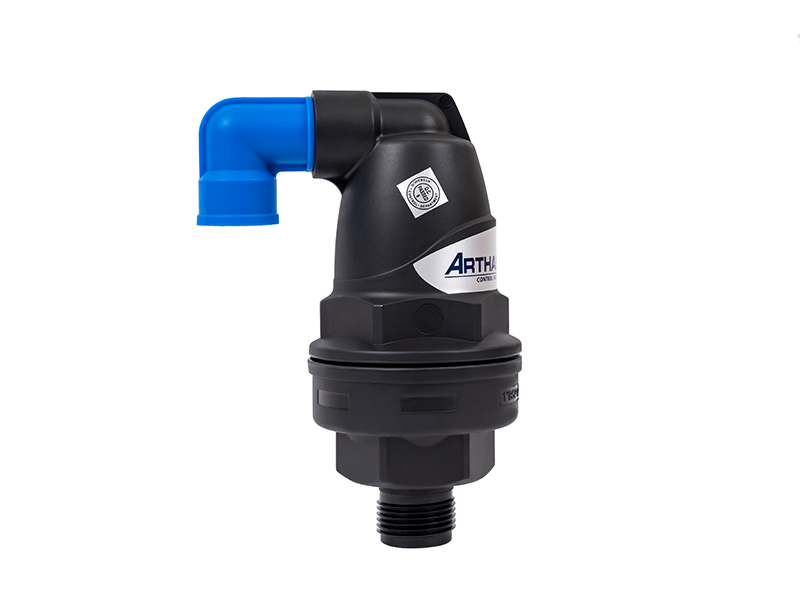
At its core, this hydromechanical device automatically releases trapped air from a pressurized fluid pipeline without allowing water to escape. Picture a durable outer casing housing a buoyant internal float and a precision-engineered top orifice. The physics governing its operation are straightforward yet highly effective. When the pipeline fills with water, the air is pushed ahead and exits through the open orifice. Once the water reaches the valve chamber, it lifts the internal float. The float then presses against the orifice to create a watertight seal. If air enters the system during operation, it naturally rises to the valve and displaces the water in the chamber. The float drops, opening the orifice to expel the air before sealing again.
Proper air management remains a non-negotiable aspect of modern agricultural infrastructure. When trapped air accumulates, it creates multiple operational hazards. Specifically, these gaseous pockets reduce the cross-sectional flow capacity of the pipe by acting as a physical bottleneck. This drastically increases friction loss. Your irrigation pump is forced to work harder and consume more energy to deliver less water. Furthermore, trapped air is highly compressible. When water velocity changes abruptly, the air pockets compress and expand violently. This creates hydraulic shock, commonly known as water hammer. Water hammer can easily shatter PVC pipes and damage expensive fittings. Finally, during system drain-down, the absence of air management can lead to vacuum formation. A strong vacuum possesses enough force to literally collapse thin-walled pipes inward.
The foundational rule of any successful layout is dictated by topography. Because air is significantly lighter than water, it naturally seeks the path of least resistance. It travels to and gets trapped at the highest points of a pipeline network. To pinpoint these critical locations, operators must accurately map the Elevation Profile of their land before breaking ground. Utilizing topographical maps and modern GPS surveying tools is standard practice during this planning phase. As a general engineering principle, you must always install an air valve at the peak of any significant incline. You want it specifically just before the pipe slopes downward again. Failing to place a valve at these critical apexes guarantees the formation of a restrictive air pocket that will throttle your water delivery.
While major hills and steep ridges present obvious locations for hardware placement, minor high points are frequently overlooked during the initial trenching phase. A common mistake in irrigation design is assuming that relatively flat terrain does not require air management. Even slight, almost imperceptible changes in elevation across seemingly flat pasture can trap micro-pockets of air. Over time, these tiny bubbles merge into larger, restrictive voids. They behave exactly like a partially closed physical valve. A comprehensive layout accounts for these subtle topographical shifts. It ensures that valves are placed wherever the pipe grade transitions from an upward slope to a downward slope, regardless of how minor the change appears to the naked eye.
Integrating air management into your broader Zone Layout is essential for achieving uniform water distribution across diverse crops or complex landscapes. Different irrigation setups handle trapped air in vastly different ways. For instance, delicate drip lines are notoriously sensitive to pressurized air pockets. Compressed air can easily cause uneven dripping or violently blow out emitters. In contrast, large agricultural impact sprinklers might simply sputter aggressively before resuming normal operation. To protect sensitive infrastructure, best practices involve placing valves at the start of a manifold or at the highest point of a specific watering zone. By bleeding the air out of the system before it reaches the lateral lines, you ensure that the delicate emitters receive a steady, uniform flow of water rather than a destructive blast of compressed air.
Topography is not the sole factor to consider. Horizontal distance matters equally in extensive agricultural networks. On long, flat runs of PVC or HDPE pipe, elevation changes may not exist. However, air will still accumulate continuously due to water turbulence and dissolved gases precipitating out of the solution. To combat this hidden threat, engineers rely on strict Spacing guidelines. The current industry standard recommends installing a unit every 1,500 to 2,500 feet on straight horizontal runs. This strategic placement prevents air from accumulating to dangerous volumes over long distances. Additionally, these devices must be strategically positioned at the discharge side of deep well pumps and immediately before check valves. This manages the massive volumes of air introduced during system startup and shutdown.
High-quality hydraulic hardware represents a precision instrument and a significant financial investment. Leaving it exposed to the elements or burying it directly in the soil guarantees premature failure. Valves installed completely above ground are highly vulnerable to environmental and mechanical threats. Heavy machinery like tractors, commercial mowers, and even foraging wildlife can easily damage an exposed unit. Moreover, in regions prone to frost, freezing temperatures can solidify the residual water inside the mechanism. This cracks the heavy-duty casing and leads to catastrophic mainline leaks. Housing your equipment in a dedicated Valve Pit effectively shields it from these external dangers while preventing soil intrusion that could jam the internal float mechanism.
Constructing a functional subterranean enclosure requires strict adherence to three specific engineering principles. These ensure it performs as intended year-round.
Identifying the correct installation location is only half the battle. Selecting the appropriate hardware type is just as critical for long-term system stability. Irrigation professionals typically utilize three distinct categories of valves.
First, Kinetic Air Valves are engineered with a large orifice to discharge massive volumes of air rapidly during initial system startup. Crucially, they also allow air back into the pipe during shutdown, preventing dangerous vacuum formation and pipe collapse. Second, Automatic Air Release Valves feature a much smaller orifice. They continuously bleed small, pressurized air pockets that accumulate while the system is actively running under full pressure. Finally, Combination Air Valves intelligently merge both kinetic and automatic functions within a single body, offering comprehensive protection for complex mainlines.
Accurate valve sizing is a delicate balance. It is directly dictated by your pipeline internal diameter, the maximum flow rate, and the standard operating pressure. If you install an oversized valve, it may slam shut too quickly during filling, triggering the exact hydraulic shock it was meant to prevent. Conversely, an undersized orifice will fail to expel air fast enough, rendering the device virtually useless during pump startup.
To make this concrete, let us look at industry-standard sizing. For most standard agricultural sub-mains and large landscape zones, a 1-inch connection is the sweet spot. For example, the K10 1-Inch Irrigation System Air Release Valve from Arka Irrigation delivers exceptional performance for these applications. It features a robust UV-resistant polymer body, handles operating pressures up to 150 PSI, and provides reliable kinetic and automatic air release functions.
Here is a quick reference table to help you match valve types to specific field applications:
| Valve Type | Primary Function | Best Installation Location | Common Sizing |
|---|---|---|---|
| Kinetic Vacuum Breaker | Expels large air volumes during startup. Prevents vacuum collapse during shutdown. | Pump discharge stations, major elevation peaks, pipe ends. | 1-inch to 3-inch |
| Automatic Air Release | Vents micro-bubbles continuously while the system is under full pressure. | Minor high points, long horizontal runs. | 0.5-inch to 1-inch |
| Combination Valve | Provides both kinetic and automatic continuous air release. | Critical mainline peaks, complex manifold starts. | 1-inch to 4-inch |
A frequent and costly error in system design is installing valves in locations where air simply does not naturally gather. For example, placing a valve on the inside of a sharp pipe bend or directly downstream of a highly turbulent fitting is highly ineffective. Hydraulic turbulence actively prevents air bubbles from coalescing at the top of the pipe. This means the aerated water will bypass the orifice entirely. Therefore, valves must always be placed on straight, laminar sections of pipe where the flow is relatively stable. This allows the air to naturally rise to the surface.
Many novice system designers focus entirely on releasing air to prevent pressure spikes. They completely ignore the equally critical need to let air back in. This oversight is a severe mechanical mistake. When a massive irrigation pump shuts off, the heavy water column continues moving forward due to momentum. This creates a severe vacuum behind it. If a kinetic valve is not present to let air into the pipe to replace the draining water, high-density polyethylene or thin-walled PVC pipes can easily flatten and collapse under the atmospheric pressure.
An otherwise perfect layout is only as good as its long-term maintainability. Burying valves directly in the dirt without a proper protective enclosure guarantees they will be neglected. Placing them in areas quickly overgrown with dense, thorny vegetation yields the same result. These precision devices require at least an annual inspection to ensure the internal float mechanism remains free of hard water mineral buildup, nesting insects, and debris. Making valves impossible to reach inevitably leads to silent mechanical failure. This leaves the pipeline entirely unprotected.
A highly successful irrigation network relies heavily on a meticulous approach to hydraulic design and air management. By respecting the topographical elevation profile, adhering to strict horizontal spacing guidelines, mapping out a smart zone layout, and protecting your hardware inside a well-drained valve pit, you virtually guarantee the efficiency and longevity of your water delivery system.
Investing adequate time and resources into the layout phase ultimately saves thousands of dollars in blown pipes, damaged pumps, and wasted electrical energy down the road. Upgrade your agricultural infrastructure today by prioritizing reliable air management solutions. For professional-grade hardware tailored to your specific hydraulic needs, explore the complete range of precision air release valves at Arka Irrigation. Ensure your fields remain perfectly hydrated and your equipment performs flawlessly, season after season.
The absolute best places are at the highest elevation points of your pipeline, at the discharge side of deep well or centrifugal pumps, and at regular spacing intervals on long, flat horizontal runs to prevent localized air accumulation.
While it may be technically possible on very small, completely flat residential setups, it is highly discouraged for commercial, agricultural, or large-scale landscaping systems. Without proper air management, you risk severe water hammer, significantly reduced water flow, pump cavitation, and catastrophic pipe bursts.
Signs of a poor layout include sputtering sprinkler heads, unusually high energy bills caused by your pump overworking to overcome air friction, loud banging noises in the pipes, and frequent, unexplained pipe leaks at joints and fittings.
Yes. If you live in a climate that experiences freezing temperatures, the residual water trapped inside the valve body can freeze, expand, and crack the outer casing. They should be installed in an insulated enclosure and drained alongside the rest of your irrigation network before the first winter freeze.
An automatic air release valve continuously bleeds small amounts of pressurized air out of a running system. A vacuum breaker features a much larger orifice and allows large volumes of air into the pipe when the system is shut off. This essential function prevents the pipes from collapsing under a vacuum. Combination valves intelligently integrate both of these critical functions into one unit.
The cost varies depending on the size and type of the valve, as well as the complexity of the installation. A standard 1-inch automatic valve might cost a fraction of a large 4-inch combination valve. However, the cost of installing the proper hardware is always significantly lower than the expense of repairing a burst mainline or replacing a burnt-out pump.
While air valves are highly effective at mitigating hydraulic shock caused by trapped air, they are part of a broader solution. They eliminate air-induced water hammer. However, preventing water hammer entirely also requires slow-closing zone valves, Variable Frequency Drives on pumps, and proper pipe sizing to control water velocity.


