
Views: 0 Author: Site Editor Publish Time: 2025-09-25 Origin: Site


Cyclone desander filters are essential devices used in various industries to efficiently remove solid particles from fluids. By leveraging the principle of centrifugal separation, these filters create a powerful vortex that enables the effective separation of denser particles, such as sand and debris, from cleaner fluid. This article explores the inner workings of cyclone desander filters, detailing their operational principles, the processes involved in particle removal, and the critical factors that influence their performance. Understanding how these filters function is crucial for optimizing their use in applications ranging from oil and gas to water treatment and mining.
A cyclone desander filter is a specialized device designed to remove solid particles, such as sand and debris, from fluids. It operates primarily in industries like oil and gas, water treatment, and mining, where fluid cleanliness is crucial for equipment protection and process efficiency. The filter uses a cyclone or vortex motion to separate particles from the fluid stream without relying on traditional filter media like cloth or screens.
The core function of this filter is to leverage centrifugal forces to separate heavier solid particles from the fluid. As the fluid enters tangentially, it spins rapidly inside the cyclone chamber. This spinning motion forces the denser particles outward toward the cyclone walls while the cleaner fluid moves upward or inward to exit through a separate outlet. The solids then settle at the bottom of the cyclone and can be removed through a discharge valve.
A typical cyclone desander filter includes several important parts:
● Inlet: Where the fluid enters tangentially to create the swirling motion.
● Cyclone body: The conical or cylindrical chamber where centrifugal separation occurs.
● Outlet for clean fluid: Usually located at the top or center, allowing filtered fluid to exit.
● Solids discharge outlet: Positioned at the bottom to collect and remove separated particles.
● Valve or gate: Controls the removal of collected solids.
● Optional filter unit: Some models include a secondary filter to capture smaller particles missed by the cyclone.
These components work together to ensure efficient separation and continuous operation without clogging or excessive maintenance.
Compared to traditional filtration methods like mesh screens or bag filters, cyclone desander filters offer several advantages:
● No filter media required: This eliminates clogging problems common in mesh or cloth filters.
● High capacity: They handle large volumes of fluid efficiently due to their compact design.
● Low maintenance: Few moving parts and no filter replacements reduce downtime.
● Effective for larger particles: Typically remove particles above 40 microns, making them ideal for preliminary solids control.
● Continuous operation: Can operate without interruption, unlike batch filtration systems.
However, cyclone desanders are less effective at capturing very fine particles below their design threshold, so they are often used alongside finer filtration stages in a multi-step solids control system.
Selecting a cyclone desander filter depends on factors like particle size, fluid flow rate, and pressure conditions to ensure optimal performance in your specific industrial application.
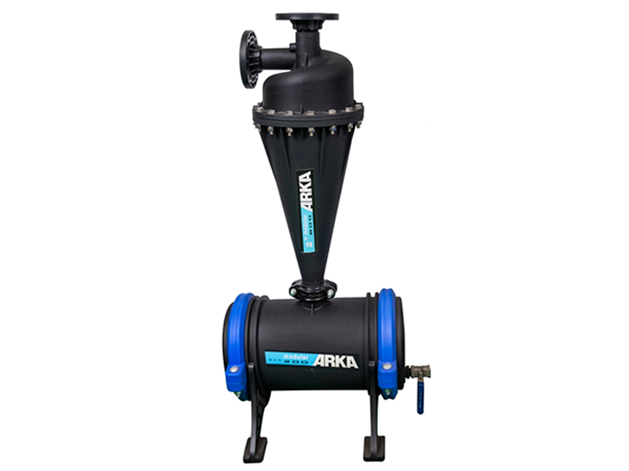
A cyclone desander filter works on the principle of centrifugal separation. When fluid containing solid particles enters the filter tangentially, it creates a strong swirling or vortex motion inside the cyclone chamber. This spinning motion generates centrifugal force, pushing denser particles outward toward the cyclone walls. Meanwhile, the lighter fluid moves inward and upward, allowing it to exit through a separate outlet as cleaner fluid.
This separation relies on the difference in density between the solid particles and the fluid. The centrifugal force causes heavier particles like sand and debris to move away from the center and settle along the cyclone’s conical walls. The fluid’s rotational speed and the cyclone’s shape enhance this effect, making the separation efficient even without traditional filter media.
Here’s how the particle removal process unfolds inside a cyclone desander filter:
● Tangential Entry: Fluid enters tangentially, creating a high-speed vortex.
● Centrifugal Force Application: The vortex generates centrifugal force that pushes solid particles outward.
● Particle Settling: Heavier particles slide down along the cyclone walls due to gravity and fluid inertia.
● Clean Fluid Exit: The lighter, cleaner fluid spirals upward or inward and exits through the outlet pipe.
● Solids Discharge: Particles collect at the bottom of the cyclone in a hopper or collection chamber, where they can be removed via a discharge valve.
This continuous process allows the cyclone desander filter to operate without clogging, maintaining steady filtration even under high flow rates.
Pressure and flow rate play critical roles in the cyclone desander’s performance:
● Pressure: Sufficient inlet pressure is needed to maintain the vortex’s strength. If pressure is too low, the centrifugal force weakens, reducing particle separation efficiency. Typically, a minimum pressure of around 0.2 to 0.3 MPa is required, depending on the cyclone size and application.
● Flow Rate: The flow rate must match the cyclone’s design capacity. Too high a flow rate can cause turbulence, disturbing the vortex and allowing particles to escape with the fluid. Too low a flow rate reduces the centrifugal force, lowering separation effectiveness.
Optimizing both pressure and flow rate ensures the cyclone desander filter removes solids efficiently while maintaining stable operation.
Regularly monitor inlet pressure and flow rate to maintain optimal cyclone desander performance and prevent reduced particle separation efficiency.
Cyclone desander filters come mainly in two types: inline and offline. Each type serves specific purposes and suits different operational setups.
Inline cyclone desanders are installed directly into the main fluid pipeline. They handle the fluid flow continuously as part of the regular process. When fluid passes through the pipeline, it enters the cyclone tangentially, creating the vortex needed for particle separation without interrupting the flow.
Key features:
● Continuous operation without stopping the flow.
● Compact design fits into existing pipeline systems.
● Ideal for applications requiring constant solids removal.
● Often used in oil and gas production lines, water treatment pipelines, and industrial fluid systems.
Because they operate inline, these filters help protect downstream equipment by removing sand and debris before the fluid reaches sensitive components.
Offline cyclone desanders work separately from the main pipeline. Instead of filtering fluid directly in the flow line, they treat batches or a side stream of fluid diverted from the main process. The fluid is pumped into a separate vessel containing the cyclone desander, where solids are removed before the fluid returns to the system or is disposed of.
Key features:
● Operate on diverted fluid streams or batches.
● Allow for more controlled and thorough cleaning.
● Easier to inspect and maintain without shutting down the main line.
● Common in drilling fluid recycling systems and batch water treatment processes.
Offline filters are useful when the main process cannot be interrupted or when higher precision in solids removal is required.
Type | Typical Applications | Advantages |
Inline Cyclone | Oil & gas pipelines, industrial fluid systems | Continuous operation, space-saving |
Offline Cyclone | Drilling fluid recycling, batch water treatment | Controlled cleaning, easy maintenance |
Choosing between inline and offline depends on factors like process continuity, maintenance preferences, and desired cleaning precision.
For continuous processes needing minimal downtime, opt for inline cyclone desander filters; for batch treatment or easier maintenance, offline types work best.
Cyclone desander filters are made from materials that resist wear, corrosion, and impact. The most common materials include:
● Stainless Steel: Popular due to its excellent corrosion resistance and durability. It suits harsh environments like oil and gas or seawater applications.
● Ceramic: Used for parts exposed to high abrasion, such as the inner lining. Ceramic offers superior wear resistance, extending the filter’s service life.
● Polyurethane: Often used for components requiring flexibility and impact resistance. It’s lighter than metal and provides good erosion protection.
● Carbon Steel: Sometimes used for structural parts where corrosion resistance is less critical but strength is important.
● Rubber Linings: Applied inside cyclone bodies to reduce wear from sand and debris, especially in mining or water treatment setups.
Material choice directly affects filter efficiency, longevity, and maintenance needs:
● Wear Resistance: Abrasive particles like sand can quickly erode softer materials. Using ceramics or polyurethane linings significantly reduces wear, maintaining separation efficiency longer.
● Corrosion Resistance: Filters exposed to corrosive fluids need stainless steel or coated materials to prevent rust or chemical damage.
● Weight and Installation: Lightweight materials like polyurethane simplify installation and reduce structural support requirements.
● Cost vs. Durability: While ceramics and stainless steel cost more upfront, they lower long-term maintenance and replacement expenses.
Selecting materials depends on your specific application conditions:
● Fluid Type: Corrosive fluids require stainless steel or corrosion-resistant coatings.
● Particle Abrasion: High sand content calls for ceramic or polyurethane linings.
● Operating Temperature: Some materials perform better at elevated temperatures; stainless steel is preferred for heat resistance.
● Budget Constraints: Balance initial investment against expected maintenance and lifespan.
● Environmental Factors: Consider exposure to chemicals, humidity, or saltwater.
Consult manufacturers or industry experts to match material properties with your operational demands. Proper material selection ensures your cyclone desander filter performs reliably, reduces downtime, and saves costs over time.
Always verify material compatibility with your fluid’s chemical and physical properties to maximize cyclone desander filter lifespan and efficiency.
Cyclone desander filters are highly efficient at removing solid particles such as sand and debris from fluids. Their design leverages centrifugal force to separate particles quickly and effectively. Because the fluid spins rapidly inside the cyclone, heavier particles are thrown outward and settle at the bottom, while cleaner fluid exits through the outlet. This process can remove particles typically larger than 40 microns with high accuracy. The efficiency reduces wear and tear on downstream equipment and improves overall system performance. Unlike traditional filters, cyclone desanders do not rely on filter media, so they avoid clogging issues that can reduce filtration effectiveness.
One of the key benefits of cyclone desander filters is their compact size. Their cylindrical or conical design allows them to fit easily into existing pipeline systems without requiring significant space. This compactness makes installation straightforward, even in tight industrial settings. Inline models integrate directly into fluid lines, while offline units can be added to side streams or separate vessels. The simple structure also means fewer parts to install, reducing setup time and complexity. Additionally, their lightweight construction, especially when made from materials like polyurethane or stainless steel, eases handling and mounting.
Cyclone desander filters require very little maintenance compared to other filtration methods. Since they do not use filter cloths or screens, there’s no need for frequent replacements or cleaning of filter media. The absence of moving parts reduces wear and mechanical failure risks. Maintenance mainly involves periodic inspection of the solids discharge valve and cleaning the collection hopper to prevent buildup. This low-maintenance nature minimizes downtime and labor costs, making cyclone desanders ideal for continuous industrial operations. Their reliable performance under varying flow rates and pressures also reduces the need for frequent adjustments or repairs.
Schedule regular inspections of the solids discharge valve and hopper to maintain cyclone desander efficiency and prevent unexpected blockages.
Maintaining a cyclone desander filter starts with regular cleaning. Over time, sand and debris accumulate in the collection chamber or hopper at the bottom. If not removed, this buildup can reduce the filter’s efficiency and cause blockages. Cleaning frequency depends on the fluid’s particle load and operational hours. Typically, operators should flush out the solids through the discharge valve routinely, ensuring no excessive sand remains inside.
For deeper cleaning, the internal surfaces of the cyclone body may require manual or automated washing to remove stubborn deposits. This keeps the vortex flow smooth and prevents wear caused by abrasive particles stuck to the walls. Some systems include flushing ports or spray nozzles to facilitate this process without disassembling the unit.
Regular inspections are essential to spot wear or damage early. Key components to check include:
● Solids discharge valve: Ensure it opens and closes smoothly without leaks.
● Cyclone body lining: Look for erosion or corrosion, especially in high-abrasion environments.
● Inlet and outlet connections: Confirm no cracks or deformations exist.
● Seals and gaskets: Verify they remain intact to prevent fluid leaks.
If any parts show signs of excessive wear or damage, timely replacement is critical. Using worn components can reduce separation efficiency and risk equipment failure. Keep spare parts on hand for quick swaps to minimize downtime.
Beyond cleaning and inspections, maintaining optimal cyclone desander performance involves monitoring operational parameters:
● Inlet pressure: Maintain within the recommended range to sustain the vortex’s strength.
● Flow rate: Keep flow consistent to avoid turbulence or weak centrifugal forces.
● Discharge valve operation: Check that solids removal happens regularly to prevent clogging.
Implementing a maintenance schedule based on manufacturer guidelines and operational experience helps maximize filter lifespan. Documenting maintenance activities also aids in identifying trends or recurring issues.
Establish a routine maintenance checklist including cleaning, inspection, and performance monitoring to keep your cyclone desander filter running efficiently and avoid unexpected downtime.
Cyclone desander filters play a crucial role in the oil and gas sector. Drilling fluids often carry sand and solid particles that can damage expensive equipment like pumps, valves, and drilling motors. Using cyclone desanders helps remove these solids early in the process, protecting downstream equipment and improving drilling efficiency. They handle large volumes of fluid continuously, making them ideal for high-pressure, high-flow environments common in oil and gas operations. Additionally, their ability to remove particles larger than 40 microns ensures that the drilling fluid remains clean enough to maintain wellbore stability and reduce wear on machinery.
In water treatment plants and mining operations, cyclone desander filters efficiently separate sand and other suspended solids from water or slurry. This separation prevents clogging and abrasion in pumps, pipes, and other equipment. For example, in mining, slurry often contains abrasive particles that can quickly wear down machinery if not removed. Cyclone desanders reduce maintenance costs and downtime by removing these solids before they cause damage. In water treatment, they help reduce turbidity and improve water quality by removing sediments before further filtration or chemical treatment stages.
Beyond oil and gas, water treatment, and mining, cyclone desander filters find use in many other industries requiring solid-liquid separation. These include:
● Power Plants: Protect cooling systems from sand and debris, preventing corrosion and scaling.
● Chemical Processing: Remove solids from process fluids to avoid contamination and equipment damage.
● Agriculture: Filter irrigation water to prevent clogging of drip lines and sprinklers.
● Food and Beverage: Separate solids from liquids during production processes to maintain product quality.
Their simple design, low maintenance, and high efficiency make them adaptable to various industrial needs. Cyclone desanders can be customized in size and material to handle different fluid types, pressures, and particle loads, ensuring optimal performance across sectors.
When selecting a cyclone desander filter, consider your industry’s specific fluid properties and particle sizes to choose a model that maximizes protection and efficiency.
Cyclone desander filters use centrifugal force to efficiently remove solid particles from fluids, enhancing equipment protection and process efficiency across industries. Future trends may focus on improving particle separation for finer particles and adapting to diverse fluid types. Cyclone desanders offer compact design and minimal maintenance, making them ideal for continuous operations. About ARKA - 30 Years of Excellence in Water Filtration provides high-quality cyclone desander filters, ensuring reliable performance and reducing downtime, offering significant value to various industrial sectors.
A: A Cyclone Desander Filter is a device that removes solid particles like sand from fluids using centrifugal force, commonly used in industries such as oil and gas, water treatment, and mining.
A: It works by creating a vortex that spins fluid, using centrifugal force to push denser particles outward, separating them from cleaner fluid, which exits through a separate outlet.
A: It efficiently removes large solid particles without clogging, protecting equipment and improving process efficiency.
A: It requires no filter media, offers high capacity, low maintenance, and continuous operation, making it ideal for handling large fluid volumes.
A: Performance depends on inlet pressure, flow rate, and particle size, which must match the cyclone's design specifications for optimal separation efficiency.


