
Views: 0 Author: Site Editor Publish Time: 2025-09-30 Origin: Site


In the realm of industrial water treatment, the quest for efficient and reliable filtration solutions is paramount. Disc filters have emerged as a leading choice, combining advanced technology with practical design to meet the rigorous demands of various industries. These systems utilize stacked discs with micro-structured surfaces to effectively capture fine particles and suspended solids, ensuring the delivery of clean water essential for operational success. With their compact footprint, ease of maintenance, and energy efficiency, disc filters not only enhance water quality but also contribute to sustainable practices in industrial settings. This article explores the numerous benefits of employing disc filters in water treatment processes across diverse industrial applications.
Disc filters consist of multiple stacked discs made from durable materials like polyester or polypropylene. These discs are tightly compressed to form a cylindrical shape. Each disc features grooves or micro-structured surfaces designed to trap particles as fluid passes through. The main components include:
● Filter Discs: The core filtration media that capture particulates.
● Drive System: Rotates the discs to ensure even filtration and cleaning.
● Backwash System: Cleans the discs by reversing flow and loosening trapped particles.
● Enclosure: Houses the entire assembly, protecting it from environmental factors.
This design maximizes filtration area within a compact footprint. The discs' grooves create a large surface area, allowing efficient particle capture without requiring much space.
The filtration process in disc filters involves two main phases: filtration and backwashing.
Filtration Phase:
1. Fluid enters the filter housing.
2. It flows through the stacked discs.
3. Particles larger than the gap size between discs get trapped in the grooves.
4. Clean fluid exits the filter, free of trapped solids.
Backwashing Phase:
1. Flow reverses to dislodge trapped particles.
2. Discs slightly separate and rub against each other.
3. Particles flush out with the backwash water.
4. Discs compress again, and normal filtration resumes.
This self-cleaning mechanism maintains high filtration efficiency and extends the filter’s service life.
Disc filters come in various types tailored to specific industrial needs:
● Manual Disc Filters: Require operator intervention for backwashing.
● Automatic Disc Filters: Feature automated backwash cycles, reducing labor.
● Double Disc Filters: Use two sets of discs for enhanced filtration efficiency.
● In-line Disc Filters: Installed directly in pipelines for point-of-use filtration.
● End-line Disc Filters: Positioned at the end of treatment lines for final polishing.
Each type offers different advantages depending on the application scale, maintenance capacity, and filtration requirements.
Choose an automatic disc filter system for continuous industrial operations to minimize downtime and reduce manual maintenance efforts.
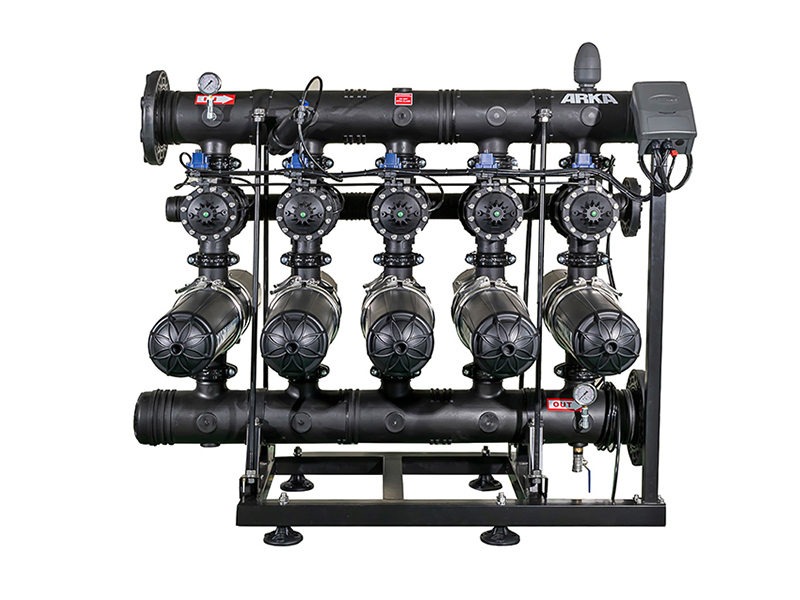
Disc filters excel at capturing fine particles, providing consistently clean water or fluids essential for industrial processes. Their stacked disc design creates multiple filtration layers, trapping sediments and impurities effectively. This high efficiency reduces wear on machinery, prevents clogging in downstream equipment, and improves overall process quality. Industries like petrochemical manufacturing and food processing benefit from the reliable removal of contaminants, ensuring product purity and operational stability.
One standout advantage of disc filters is their compact form factor. Unlike bulky sand or multimedia filters, disc filters fit into smaller footprints. This is especially helpful in plants with limited space or where retrofitting existing systems is necessary. Their modular design allows for easy scaling by adding more units without requiring extensive facility expansion. This space efficiency helps reduce infrastructure costs and allows plants to optimize valuable floor area.
Disc filters are designed for straightforward upkeep. The self-cleaning backwash system minimizes manual cleaning, reducing downtime and labor costs. Automatic models further simplify maintenance by scheduling backwash cycles without operator intervention. Durable materials like polypropylene or polyester resist corrosion and mechanical wear, extending service life even under harsh conditions. This durability lowers replacement frequency and keeps maintenance budgets manageable.
Operating disc filters demands less energy compared to some traditional filtration systems. Their low-pressure drop design means pumps work less hard, saving power. Automated backwash features optimize water and energy use by activating only when needed. Over time, these efficiencies translate into significant operational cost savings. Although initial investment may be higher, the reduced maintenance, energy consumption, and downtime contribute to a favorable total cost of ownership.
Opt for automatic disc filter systems in continuous industrial operations to boost energy savings and reduce manual maintenance efforts.
Disc filters play a crucial role in industrial water filtration. They remove suspended solids and fine particles from process water, cooling systems, and boiler feedwater. This filtration helps prevent equipment damage, reduces downtime, and maintains product quality. Industries such as petrochemical, food and beverage, and manufacturing rely on disc filters to maintain clean water for efficient operations. Their compact design allows easy integration into existing systems, and automatic backwashing ensures continuous operation without frequent manual intervention.
Municipal water treatment plants use disc filters during various stages, especially tertiary treatment, to remove suspended solids and improve water clarity. They help meet stringent regulatory standards for drinking water and wastewater discharge. Disc filters efficiently reduce turbidity and total suspended solids (TSS), protecting downstream processes like disinfection and reducing chemical usage. Their modular design and small footprint make them ideal for upgrading existing plants or building new facilities in urban areas with limited space.
In agriculture, disc filters ensure irrigation water is free from sediments and organic debris that can clog drip emitters and sprinkler nozzles. They protect irrigation equipment and improve water distribution uniformity, which supports healthy crop growth. Disc filters are widely used in drip irrigation systems, greenhouse operations, and large-scale farming. Their self-cleaning feature minimizes maintenance, allowing farmers to focus on crop management rather than frequent filter cleaning.
Disc filters are essential in wastewater treatment plants for removing suspended solids from municipal and industrial effluents. They serve as an effective tertiary treatment option, polishing effluent before discharge or reuse. By capturing fine particles, disc filters help meet environmental regulations and improve the quality of reclaimed water. Their ability to handle variable flow rates and solids loads makes them adaptable to different wastewater streams. Additionally, their energy-efficient operation and low water consumption during backwash contribute to sustainable wastewater management.
When selecting disc filters for your application, consider the specific water quality and flow conditions to choose the appropriate filter type and optimize performance.
Disc filter systems often require a significant upfront investment. The advanced materials, precise manufacturing, and automated backwash mechanisms contribute to higher purchase and installation expenses compared to simpler filtration methods like sand or screen filters. For industries or municipalities with tight capital budgets, this initial cost may be a barrier to adoption. However, the long-term savings in maintenance, energy, and operational efficiency often offset this upfront expense over time. Still, careful financial planning and cost-benefit analysis are essential before implementation.
Although disc filters feature a self-cleaning backwash system to reduce clogging, they are not immune to it. In environments with high concentrations of suspended solids or sticky contaminants, particles can accumulate rapidly, leading to partial clogging between the disc grooves. This buildup can reduce filtration efficiency and increase pressure drop, requiring more frequent backwash cycles. If not managed properly, clogging may cause downtime and increase water usage for cleaning. Proper pre-treatment of influent water and regular monitoring help mitigate clogging risks.
Disc filters are designed to capture particles within a specific size range, typically fine sediments and suspended solids. They excel at filtering particles larger than the disc grooves but may not effectively remove extremely fine particles such as dissolved solids, colloids, or very large debris. This limitation means disc filters often need to be part of a multi-stage treatment system, where pre-filters remove large debris and post-treatment methods handle finer contaminants. Selecting the correct disc filter grade based on the target particle size is crucial for optimal performance.
To minimize clogging risks and extend disc filter lifespan, implement proper pre-filtration and schedule regular maintenance based on influent water quality.
Disc filter technology continues evolving to meet growing industrial demands. Manufacturers now use advanced materials like nanostructured coatings to improve filtration efficiency and reduce fouling. These coatings help capture smaller particles and extend filter lifespan by resisting clogging.
Smart sensors and automation are also becoming standard. Real-time monitoring tracks parameters such as pressure drop and flow rate, enabling predictive maintenance. This reduces unexpected downtime and lowers operating costs. Automated backwash cycles adapt to water quality changes, optimizing cleaning frequency and conserving resources.
Design improvements focus on modularity and ease of integration. Compact, scalable units allow plants to expand capacity without major overhauls. Some newer models incorporate energy recovery features, improving overall system efficiency.
Sustainability is a key trend shaping disc filter development. Energy consumption is minimized by optimizing flow dynamics and reducing pressure drops. Automated backwash systems limit water use by activating only when necessary, cutting waste.
Manufacturers increasingly use recyclable and environmentally friendly materials in filter construction. This reduces the ecological footprint over the product lifecycle. Additionally, disc filters support water reuse by producing high-quality effluent suitable for non-potable applications like irrigation or industrial cooling.
Waste generated during backwash is managed carefully to prevent environmental contamination. Some systems integrate solids dewatering technologies, converting waste into easier-to-handle forms.
Stricter environmental regulations drive innovation in disc filter systems. Governments impose tighter limits on suspended solids and turbidity in discharged water, pushing plants to adopt more effective filtration.
Policies encouraging water reuse and conservation increase demand for filters that deliver consistent, high-quality output. Compliance requirements motivate manufacturers to develop filters with enhanced reliability and monitoring capabilities.
Incentives and funding programs often prioritize sustainable technologies, accelerating disc filter adoption. Operators must stay informed about evolving standards to ensure their systems remain compliant and cost-effective.
Invest in disc filters featuring smart sensors and automated controls to enhance operational efficiency and maintain compliance with tightening environmental regulations.
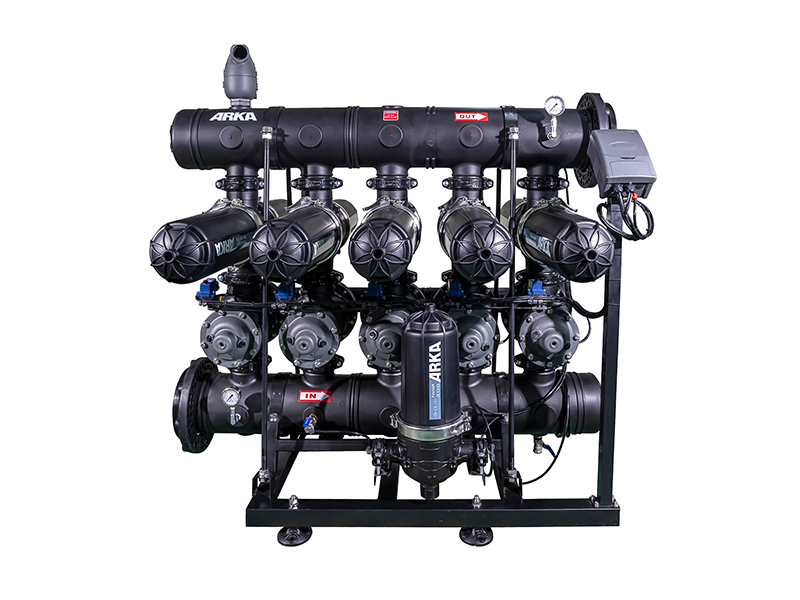
Municipal water treatment plants worldwide have benefited from disc filter systems. For example, the city of Fargo implemented disc filters to improve effluent quality before ultraviolet disinfection. The filters efficiently reduced suspended solids, enhancing the overall treatment process and ensuring compliance with strict discharge standards. Similarly, Orangeville integrated disc filters to concentrate solids before disposal. This led to shorter processing times and less environmental impact, showcasing the filters’ ability to support sustainable municipal water management.
Industries rely on disc filters to maintain process water quality and protect equipment. In the food and beverage sector, disc filters remove organic waste effectively, lowering biological oxygen demand (BOD) before water discharge. This helps meet environmental regulations and improves water reuse potential. A petrochemical plant in Texas installed disc filters in its cooling water system. The high filtration efficiency prevented particulate contamination, reducing heat exchanger fouling and equipment downtime. Automated backwashing allowed continuous operation with minimal manual intervention, illustrating operational benefits for industrial users.
Disc filters contribute significantly to environmental protection. By efficiently removing suspended solids from wastewater, they reduce pollution loads entering natural water bodies. Their compact design minimizes land use for treatment facilities, preserving natural habitats. Moreover, disc filters support water reuse strategies by producing high-quality effluent suitable for irrigation or industrial cooling. This decreases reliance on freshwater sources, conserving valuable water resources. Additionally, disc filters generate less waste than some alternative systems and avoid harmful chemicals, making them an eco-friendly choice for sustainable water treatment.
When planning disc filter implementation, study local case examples to understand performance benefits and tailor solutions to specific municipal or industrial needs.
Disc filters offer high filtration efficiency, compact design, and ease of maintenance for industrial water treatment. They excel in capturing fine particles, saving space, and reducing downtime. Consider initial costs and potential clogging when implementing these systems. Future advancements include smart sensors and sustainable materials, enhancing their role in water treatment. About ARKA - 30 Years of Excellence in Water Filtration provides innovative disc filter solutions, ensuring reliable performance and value for industrial applications. Their products stand out for durability and energy efficiency, supporting sustainable operations.
A: A Disc Filter System is a water filtration device using stacked discs with grooves to trap particles, providing efficient filtration in industrial applications.
A: A Disc Filter System operates in filtration and backwashing phases, where fluid flows through discs to trap particles, and backwashing removes trapped debris.
A: A Disc Filter System is chosen for its high filtration efficiency, compact design, ease of maintenance, and energy efficiency, making it ideal for industrial applications.


